There is a particular kind of sinking feeling that accompanies the realisation that something you believed to be genuine is, in fact, a fraud. Perhaps you have dreamt that you were handed a stack of banknotes, only to notice upon closer inspection that the paper is too smooth, the watermark is missing, or the ink is slightly off. You wake up not with a sense of supernatural omen, but with a lingering feeling of unease.
In the current economic climate of 2026, where the cost of living remains a persistent background hum of anxiety for most of us, dreaming of counterfeit money is rarely about the currency itself. Instead, it typically serves as a metaphor for perceived value, trust, and the fear of being "found out."
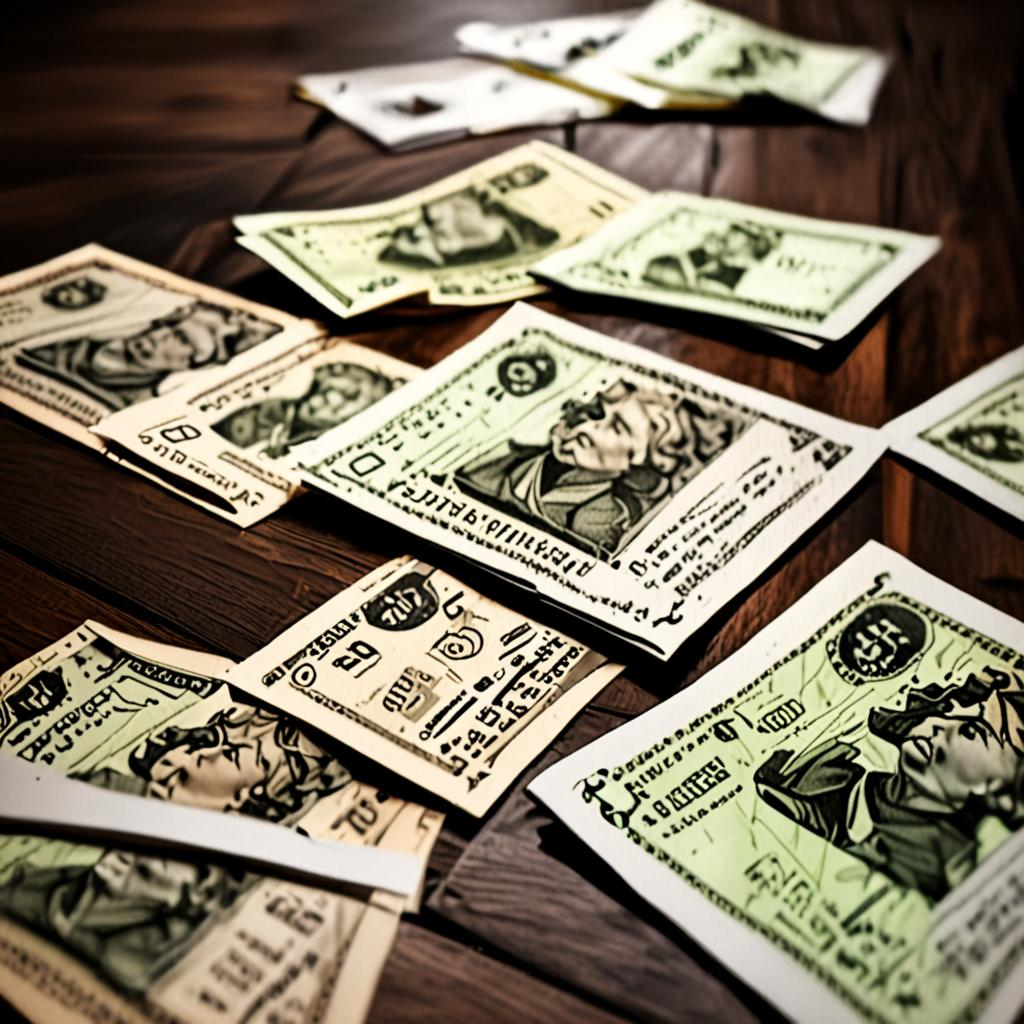
The Psychological Weight of Dreaming of Counterfeit Money
From a Jungian perspective, money in dreams rarely represents actual wealth. Rather, it symbolises "psychic energy," self-worth, or the value we place on our achievements and relationships. When that money is counterfeit, the dream is highlighting a discrepancy between appearance and reality.
For many British professionals, this manifests as imposter syndrome. We spend a great deal of our waking lives maintaining a certain persona—the competent manager, the reliable partner, the poised professional. Dreaming of counterfeit money often suggests a subconscious fear that this persona is a facade. You may feel that your success is a fluke or that you are "counterfeit" in your own right, waiting for a moment of scrutiny to reveal the truth to your colleagues or peers.
Counterfeit Money and the Anxiety of Stability
In the UK, the concept of financial security is inextricably linked to the property ladder and the stability of one's career. When we dream of fake currency, it often mirrors a deeper insecurity regarding our foundations.
If you are currently navigating the stresses of a mortgage renewal or the unpredictability of the rental market, a dream about counterfeit money may not be a psychic warning of financial loss, but rather a reflection of how precarious that stability feels. It is the subconscious mind's way of processing the feeling that the "rules" of economic stability have changed, leaving you with a sense that the security you’ve worked for is somehow illusory. This "illusory security" is a common theme in 2026, as the gap between earnings and housing costs continues to create a sense of systemic deception.
Common Scenarios and Their Nuances
The specific context of the dream often alters its meaning. Consider these common variations:
Attempting to Spend Fake Money
If you find yourself trying to use counterfeit notes in a shop or business, the dream likely centres on a fear of social humiliation. The anxiety isn't about the money, but about the act of being caught in a lie or being exposed as inadequate. It reflects a fear of judgement from others—a common trait in a culture that prizes reserve and "fitting in." It is the fear of the "mask" slipping in public.
Being Given Counterfeit Money
Receiving fake currency from someone else often points toward a breach of trust. It may suggest that you feel undervalued in a relationship or that someone in your professional life is making promises they cannot keep. It is a signal to examine where in your life you are accepting "counterfeit" affection or hollow reassurances.
Discovering Counterfeit Money in Your Own Savings
Finding fake notes in your own possession often relates to a crisis of self-worth. It suggests a feeling that your internal resources are depleted or that you have been deceiving yourself about your own capabilities. It is a projection of the "Shadow"—the parts of ourselves we find unacceptable or fraudulent.
Navigating the "Fake" Feeling: A Measured Approach
While these dreams can be unsettling, they are generally useful diagnostic tools for our mental state. Rather than viewing them as bad omens, it is more productive to treat them as prompts for honest self-reflection.
- Audit Your Stressors: Are you currently facing a situation where you feel like a fraud? Whether it is a new job role, a promotion you feel unready for, or a complex family dynamic, acknowledge the pressure.
- Challenge the Imposter: Remind yourself of the tangible evidence of your competence. The "counterfeit" feeling is a subjective emotion, not a factual reflection of your value.
- Assess Your Trust: If the dream involved another person, consider whether that relationship is built on genuine reciprocity or merely a polished surface.
Improving Sleep Quality to Process Anxiety
Recurring dreams of deception and instability are often a byproduct of poor sleep hygiene and heightened cortisol levels. When the brain doesn't enter deep REM cycles effectively, it tends to loop through anxieties rather than resolving them.
Creating a sanctuary for sleep is essential for those dealing with workplace stress, long commutes, or financial anxiety. Reducing sensory input can help the mind settle, allowing for more restorative rest. For those who find the grey, urban environment of UK cities distracting or too bright, using a high-quality sleep aid can make a difference. A 3D Silk Sleep Mask for Global Users can provide the necessary darkness to signal to the brain that it is time to switch off, potentially reducing the frequency of stress-induced dreams by facilitating deeper, more uninterrupted sleep.
FAQ: Common Questions on Money Dreams
Does dreaming of counterfeit money mean I will lose money in real life? Highly unlikely. Dreams are symbolic, not prophetic. It is far more likely that the dream reflects your feelings about money and security—such as anxiety over inflation or job stability—rather than predicting a literal financial event.
Why do I keep dreaming about fake money even when I am financially stable? Financial stability in the bank does not always equal psychological security. You may be experiencing "status anxiety" or feeling that your professional achievements are not genuinely recognised, leading your subconscious to use the imagery of counterfeit currency to represent a lack of authenticity.
Is this dream related to my health or the NHS waiting lists? Indirectly, yes. General systemic anxiety—whether it is about healthcare, housing, or the economy—often manifests as dreams of "failure" or "fraud." If you feel that the systems you rely on are failing or "fake," your brain may project this as counterfeit money.
What is the difference between dreaming of stealing money and dreaming of fake money? Stealing money often relates to a feeling of deprivation or a desire for power. Dreaming of counterfeit money is specifically about authenticity and deception. One is about quantity; the other is about quality and truth.