It is a peculiarly poignant experience to wake up in the grey light of a British morning, the remnants of a dream still clinging to you like a damp wool coat. You have spent the night in the company of someone long gone—specifically, your grandfather. Perhaps he was sitting in his favourite armchair, or perhaps he appeared in a place that no longer exists, a childhood home long since sold or renovated.
For many in the UK, dreaming of a deceased grandfather is not necessarily viewed as a supernatural visitation, but rather as a complex intersection of memory, grief, and the subconscious mind attempting to navigate the pressures of modern life. Whether you are grappling with the persistent instability of the housing market or the quiet exhaustion of a long commute, these dreams often surface when we most crave a sense of ancestral stability.
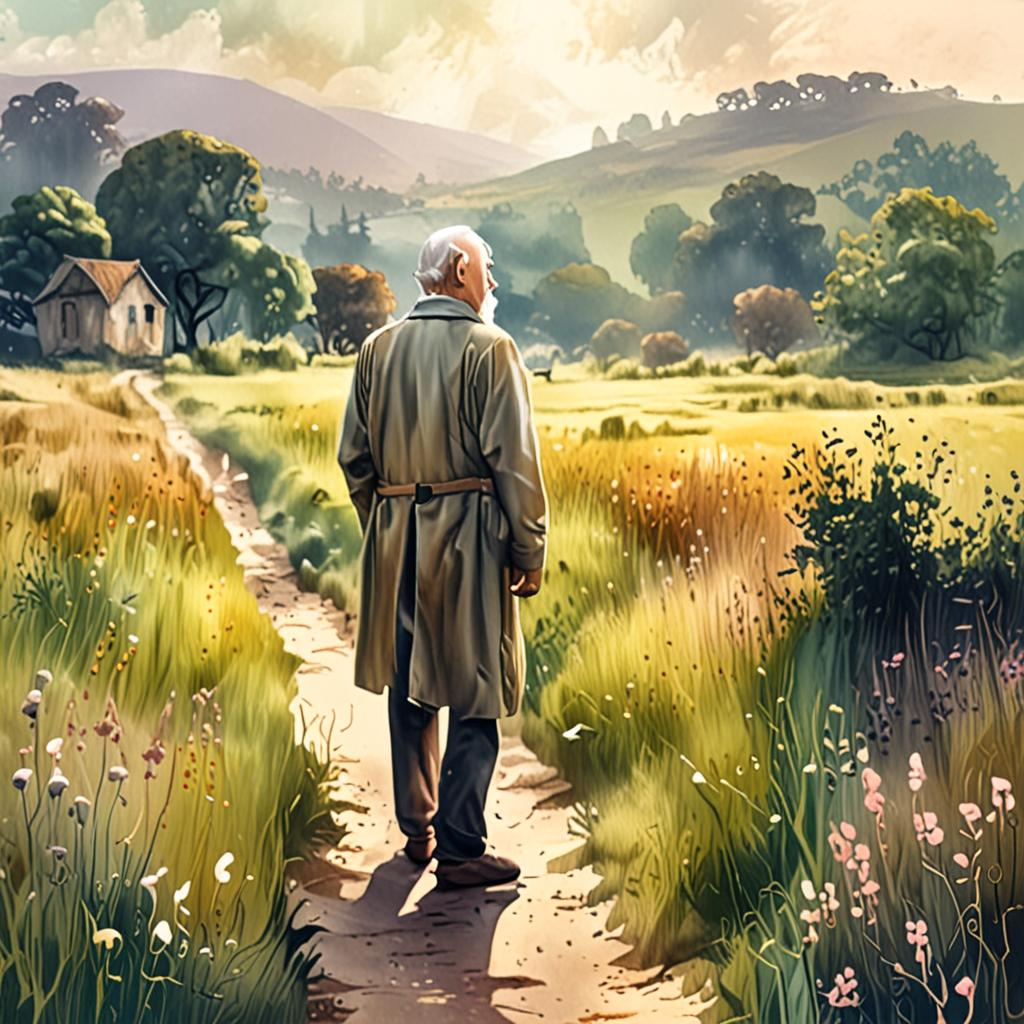
A Reflective Outlook: The Theme of Ancestral Guidance
While some may look for a "fortune" or a prophetic omen in these dreams, a more measured approach suggests that dreaming of a deceased grandfather is often a reflection of our internal state. In 2026, as we continue to navigate an era of rapid technological shift and economic uncertainty, the figure of the grandfather often emerges as an archetype of "the anchor."
If you have encountered your grandfather in your sleep recently, it may suggest a subconscious desire for a simpler time or a need for the kind of steady, unhurried wisdom that seems increasingly rare in the digital age. Rather than a prediction of the future, consider this a prompt from your unconscious to evaluate where you lack stability in your waking life. It is less about what the future holds and more about what you currently need to feel secure.
Understanding the Symbolism: Dreaming of Deceased Grandfather in the UK Context
In British culture, the grandfather often represents the "Old Guard"—the bridge between the traditional values of the past and the complexities of the present. When interpreting dreams about a deceased grandfather in the UK, we are often exploring our own relationship with authority, legacy, and identity.
The Archetype of the Wise Old Man
From a Jungian perspective, the grandfather is a manifestation of the "Wise Old Man" archetype. He represents the intuition and collective wisdom that we often ignore in our daily rush to meet deadlines or manage household budgets. If he appears calm and supportive, it may be your own psyche reminding you that you possess the resilience inherited from those who came before you.
Stability Amidst Economic Chaos
For many UK readers, the grandfather is associated with the family home—perhaps a place of permanence before the volatility of modern renting and mortgage stress. Dreaming of him can be a manifestation of "home-sickness," not necessarily for a specific physical address, but for a feeling of absolute security and belonging that feels elusive in 2026.
Common Scenarios and Their Subtle Meanings
The meaning of the dream often shifts based on the emotional tone of the encounter. British reserve often leads us to downplay these emotions in our waking lives, but the subconscious is rarely so understated.
The Peaceful Encounter
If your grandfather is smiling, nodding, or simply present in a quiet, domestic setting, it generally indicates a state of internal resolution. You may have finally come to terms with a loss, or you have reached a point of maturity where you can integrate his lessons into your own life. It is a sign of psychological harmony.
The Warning or the Stern Look
A grandfather who appears disappointed or anxious is rarely a "bad omen" in the superstitious sense. Instead, it usually reflects your own imposter syndrome or a fear that you are failing to live up to a certain family standard. In the context of current professional pressures, this may be a projection of your own anxiety regarding your career trajectory or financial decisions.
The Silent Presence
Often, these dreams involve no dialogue at all. You simply know he is there. This typically represents a need for protection. In a world of NHS waiting lists and systemic uncertainty, the silent presence of a protector in a dream serves as a psychological buffer against the stresses of the external world.
The Unfinished Conversation
Dreaming that you are trying to tell your grandfather something, but cannot find the words, often points to "unfinished business." This might not be with him specifically, but a general feeling of unresolved conflict in your current family dynamics or a sense of regret regarding things left unsaid.
A Psychological Analysis: Why Now?
It is worth asking why you are dreaming of a deceased grandfather at this specific juncture in 2026. Often, these dreams are triggered by "life transitions" that mirror the themes of age, wisdom, and ending.
- Career Shifts: When facing job uncertainty or navigating workplace politics, we subconsciously reach back to figures who represented stability and a strong work ethic.
- Housing Stress: As the property ladder remains a primary source of anxiety for British adults, the grandfather—often the original owner of the family seat—becomes a symbol of landed security.
- Grief Cycles: Grief is not linear. A dream about someone who passed decades ago can be triggered by a sensory memory—a smell, a specific shade of grey in the sky, or a phrase overheard on the train.
How to Integrate These Dreams Into Your Daily Life
Rather than searching for a mystical sign, try to treat the dream as a piece of internal data. To effectively manage the emotions brought on by dreaming of a deceased grandfather, consider these practical steps:
Acknowledge the emotion, not just the image. If you woke up feeling comforted, carry that feeling into your workday as a source of strength. If you woke up feeling anxious, ask yourself: "What in my current life feels unstable?" Use the dream as a diagnostic tool for your mental health.
Connect with your heritage. Sometimes, the simplest cure for the restlessness these dreams cause is a practical action. Look through old photographs, visit the town where he lived, or speak to an older relative about his habits. This grounds the ethereal dream in tangible reality.
Practise mindful reflection. If the dream felt like a warning, use it as a catalyst for a sensible review of your affairs. Whether it is checking your pension, reviewing your insurance, or refining your CV, turning a "dream warning" into a "practical to-do list" is a very British way of regaining control.
FAQ: Interpreting Dreams About Deceased Grandfathers in the UK
Does dreaming of my deceased grandfather mean he is visiting me? Whether you view it as a spiritual visitation or a psychological projection depends on your personal beliefs. From a psychological standpoint, it is your mind using a familiar, trusted image to process current emotions and seek comfort.
Why am I dreaming of him now, years after he passed? Dreams are often triggered by current stressors that mirror the feelings you had when he was alive, or by a current need for the qualities he embodied—such as patience, resilience, or a sense of humour in the face of adversity.
Is it a bad sign if my grandfather looks sad or angry in the dream? Not necessarily. It is more likely a reflection of your own current sadness or a projection of your worries onto a figure you associate with care. It is an invitation to examine where you feel you are falling short in your own eyes.
What if I can't remember the dream clearly, only the feeling? The emotional residue is often more important than the plot. If you woke up feeling peaceful, the dream has served its purpose of providing psychological comfort, regardless of the specific imagery.